01 / THE PROBLEM
What needed to change
Finding an answer in large technical documentation takes time, and a plain LLM chat with no document grounding can give a plausible but wrong answer — the model answers from its guesses, not from fact.
An AI assistant for technical documentation: semantic search, source-grounded answers, free local inference.
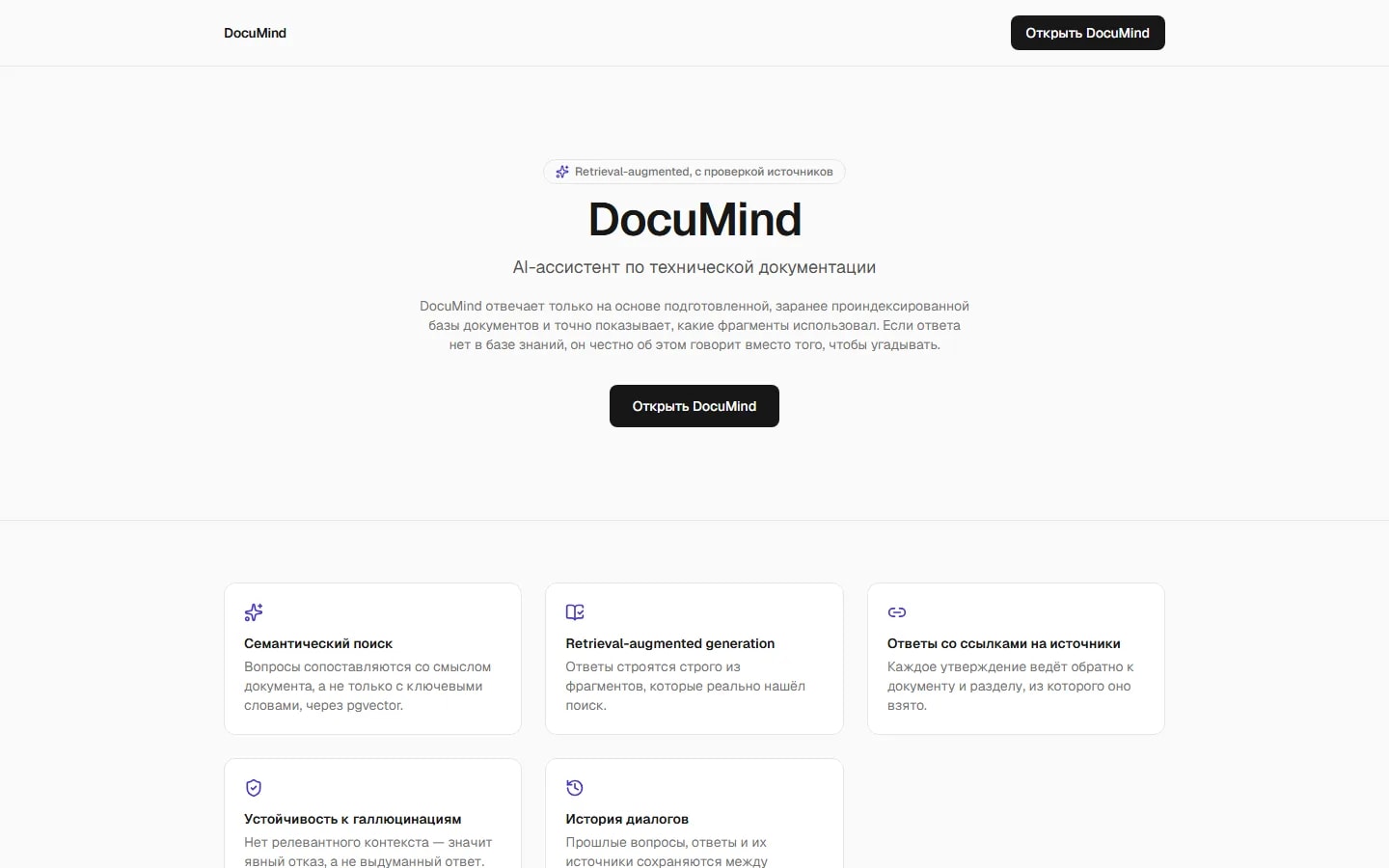
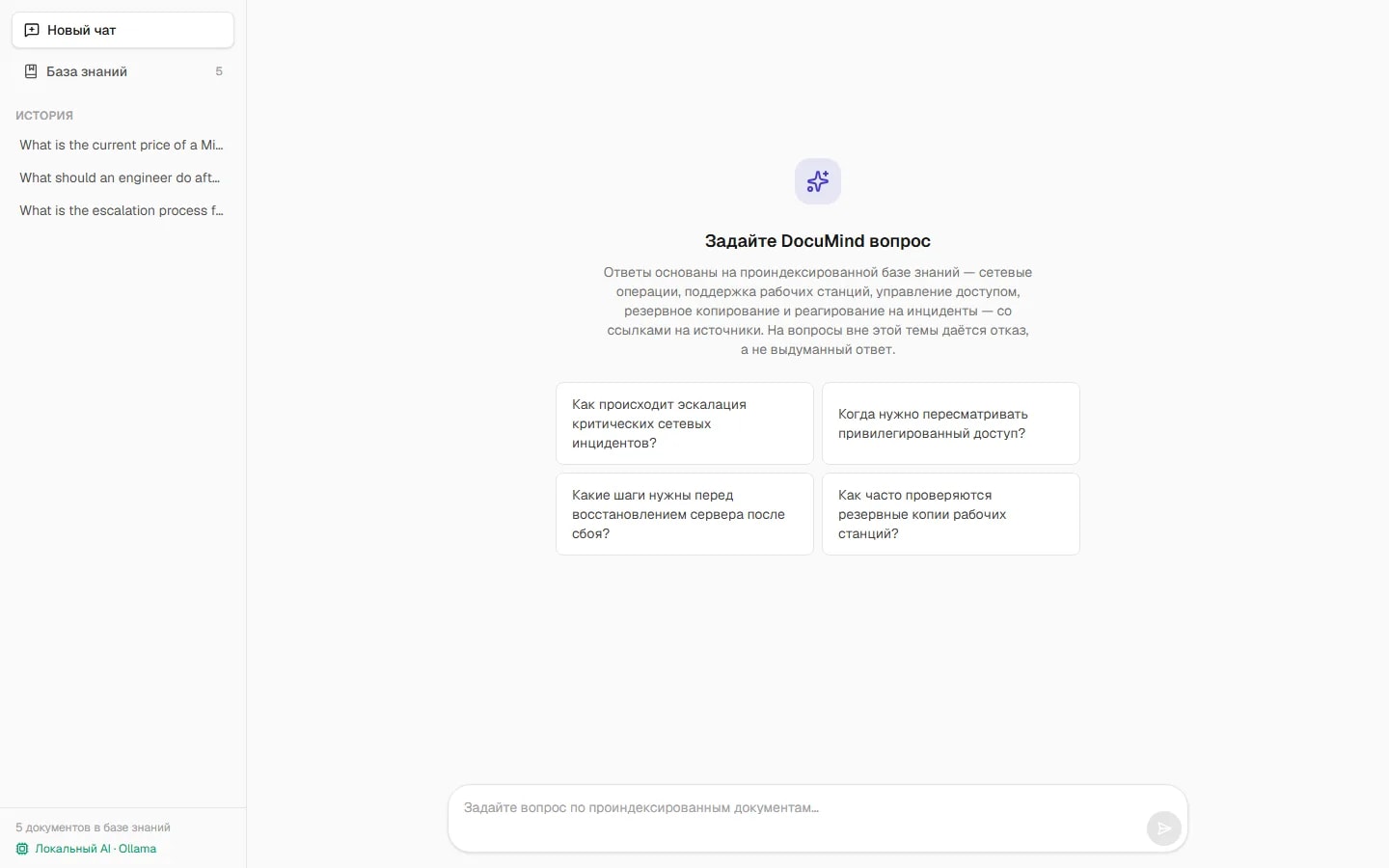
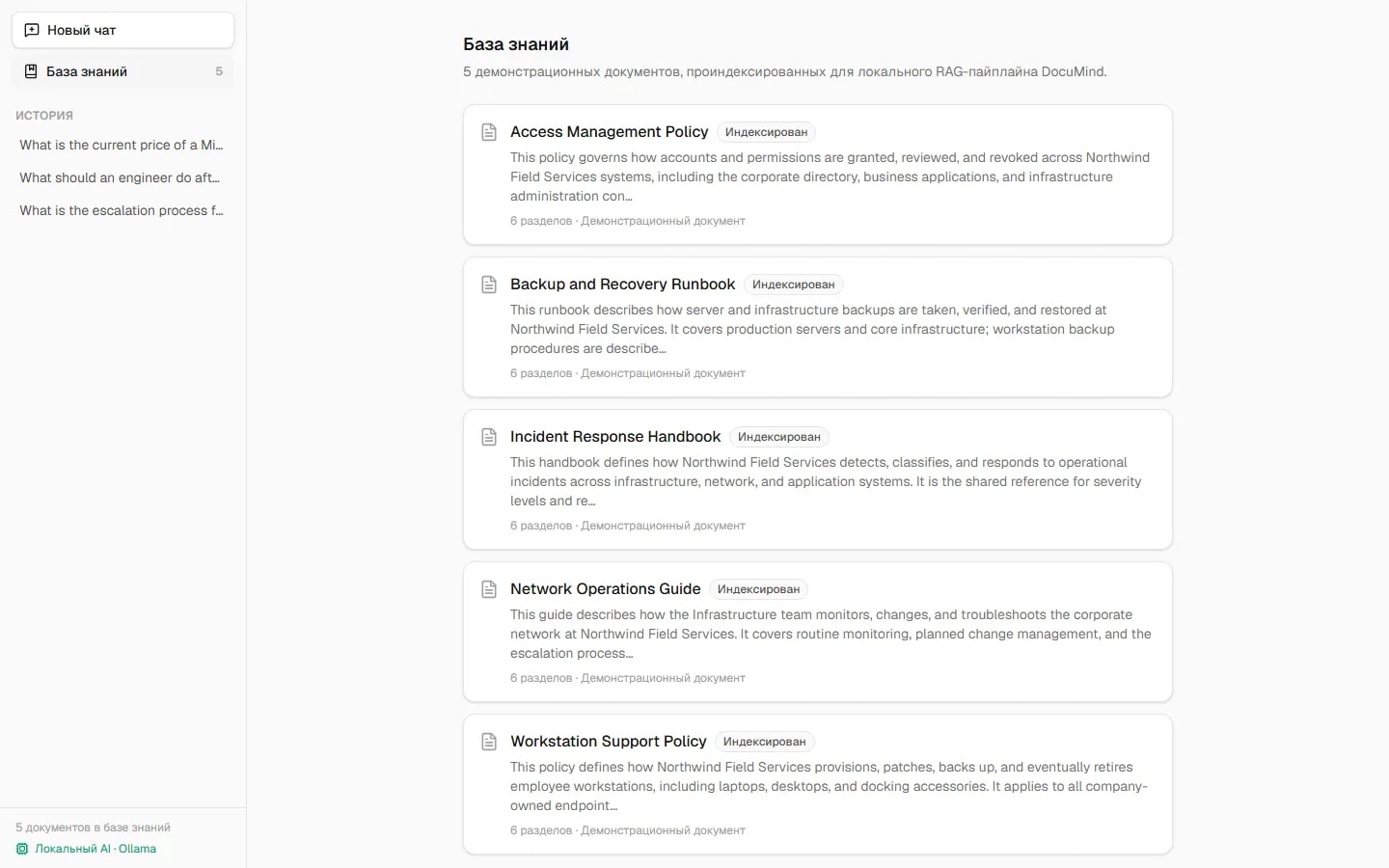
DocuMind is an AI assistant for documentation: it answers only from indexed sources, cites them, and honestly declines when the answer isn't in the knowledge base.
01 / THE PROBLEM
Finding an answer in large technical documentation takes time, and a plain LLM chat with no document grounding can give a plausible but wrong answer — the model answers from its guesses, not from fact.
02 / THE SOLUTION
DocuMind searches by meaning (semantic search via pgvector) inside the indexed document corpus and builds its answer strictly from what it found. If nothing relevant is found, the model isn't called at all — the refusal happens at the retrieval layer, not as something the model decides. Every citation the model returns is then checked against what was actually retrieved: a source that doesn't exist is dropped, and an answer with zero confirmed citations is shown as an honest refusal, not as a grounded answer.
03 / KEY FEATURES
Only the capabilities that support the core user journey.
05 / ARCHITECTURE
Documents are split into meaning-aware chunks (by heading, paragraph, and sentence — not an arbitrary length) and turned into embeddings, either locally via Ollama (nomic-embed-text) or via OpenAI, selected by a single setting. Chunks are stored in PostgreSQL with pgvector and an HNSW index. A user's question is embedded the same way and matched via cosine similarity inside Postgres; if nothing clears a measured similarity threshold, the language model isn't called at all. When it is called, generation is grounded in the retrieved chunks and returned in a structured, schema-validated form; the model's citations are intersected with what was actually retrieved before the answer reaches the user.
06 / VERIFICATION
These figures refer to the recorded, verified version of the project.
07 / LIMITATIONS
NEXT STEP
Describe it in your own words — I'll reply with how I'd approach it.